





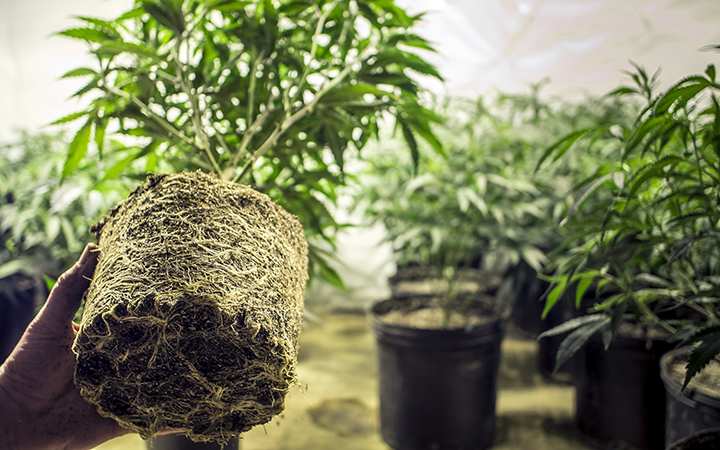
What is transplanting marijuana?

Transplanting is the procedure of “re-homing” a marijuana plant, or moving a plant into a larger pot with more soil as it grows larger.
Growers generally start the marijuana growing procedure by planting lots of seeds in little pots due to the fact that they do not understand if all of them will grow– or sprout– and they do not understand if all of them will be female.
Just female marijuana plants produce buds, so if you begin growing from routine seeds, you will need to sex them out and dispose of the males.
Why is transplanting cannabis plants crucial?
Transplanting provides a cannabis plant’s root system more area to expand, enabling the plant to grow healthy and strong and to thrive.
When roots end up being confined and can’t expand they can get twisted and end up being “rootbound”– this will reliable choke the plant, causing a stunted, sickly plant, and can even eliminate it. A healthy root system will cause a healthy weed plant.
A plant’s container will identify just how much the roots can extend, and for that reason how huge your plant will get. A container that’s too little will stunt it.
You do not wish to plant a seed in a huge pot due to the fact that you might possibly lose soil if the seed does not make it. Likewise, if growing weed outdoors, it’s difficult to plan a garden and where to put your seeds in the ground if some seeds do not make it.
A lot of weed growers begin seeds in little 4-inch or 1-gallon pots when sprouting.
For the seeds that do make it, they will require larger houses after a number of weeks of growing and will require to be transplanted either into a larger pot or straight into the ground.
When planting into the ground, ensure not to crowd your plants so their roots do not encounter each other.
The signs of a rootbound plant consist of:
- Flimsy brand-new development
- Stunted flower production
- Stem staining (reddening)
- Nutrient level of sensitivity
- Nutrient shortage
A rootbound plant might likewise appear under-watered. If a plant needs watering more than when a day, it might require to get transplanted.
When to transplant cannabis
Take a look at Johanna’s complete video series on how to grow weed on Leafly’s YouTube
A lot of cannabis plants go through 1-2 transplants throughout their life however might have more. As an example, transplanting can take place from:
- Very first container (1-gallon) to 2nd container (2-gallon): 4-8 weeks after seed germination
- 2nd container (2-gallon) to 3rd container (5-gallon): transplant 8-12 weeks later on, or 2 weeks prior to blooming
Some growers might just transplant when: utilizing the example above, from a 1-gallon to a 5-gallon container, avoiding the 2-gallon. And depending upon how huge you desire your weed plants to get, you might transplant into larger pots than what’s noted above.
The exact same chooses transplanting outdoors, in the ground– you can go directly from the very first pot into the ground, however it depends upon when you transplant and your regional environment and weather condition.
Here are some indications that your marijuana is prepared for a brand-new container.
Variety of leaves
Young plants planted in little containers are typically prepared to be transplanted after they have actually grown 4-5 sets of leaves, however remember this might differ from stress to stress.
Root advancement
Inspect the drain holes at the bottom of the container– a plant needs to have a healthy and noticeably white root system. If roots are outgrowing the holes, it’s time to transplant.
Any staining or darkening might show the plant has actually ended up being rootbound and a transplant ought to happen right away.
End of vegetative phase
A weed plant ought to remain in its last pot or in the ground with lots of space for its roots prior to it gets in the blooming phase. Throughout blooming, a plant will increase in both size and volume, as the plant itself continues to grow and as buds establish. It will need a significant quantity of area for root advancement.
Just how much area does a cannabis plant require?
| Plant height (inches) | Pot size |
| 0-6 ″ | 4-inch (16 oz.) |
| 6-12 ″ | 1-gallon |
| 12-24 ″ | 3-gallon |
| 24-42 ″ | 5-gallon |
| 42-60 ″ | 10-gallon |
| 60-84 ″ | 20-gallon |
When transplanting marijuana, provide the plant a minimum of double the area of its previous container. This minimizes the variety of times you require to transplant and reduces the danger of transplant shock, which might take place when a plant experiences severe tension from root disruption.
For instance, you might go from a 1-gallon to a 2-gallon to a 5-gallon, or from a 2-gallon to a 5-gallon to a 10-gallon.
Medium-sized indoor marijuana plants tend to be great in 5-gallon containers as an ending up pot. Big outside plants might need much larger containers to reach their leviathan capacity, often as much as 10- or 20-gallon pots.
When in doubt, constantly choose a little more area than required. A plant tends to need 2 gallons of soil for each 12 inches of development it attains throughout the vegetative phase. Understanding the prospective height of the stress you’re growing is practical.
Why not begin in the biggest pot for your cannabis plant?
Growers generally transplant weed plants 1-3 times, moving plants to larger pots slowly as they grow.
If a plant is put in too huge of a pot, the roots will not extend that much and will not absorb as much water. This can trigger water to being in the pot for a long period of time, soaking the plant and causing root rot.
You can transplant into the biggest pot for your weed plant to prevent several transplants, however take care not to water all of the soil– just water around the stalk of the plant where the young roots are.
How to transplant cannabis
Take a look at Johanna’s complete video series on how to grow weed on Leafly’s YouTube
The procedure of transplanting weed does not come without danger. Transplant shock can be exceptionally damaging to the development and advancement of a marijuana plant, and can even eliminate it. Nevertheless, through correct execution, the procedure of transplanting will benefit the plant and cause more powerful root advancement and much healthier flower production.
Very first transplant of a marijuana plant
Young marijuana plants ought to begin in a 4-inch or 1-gallon pot. This beginning pot needs to be sufficient for a couple of weeks prior to transplanting is required.
Once again, the very first transplanting ought to take place after the seedling has actually grown its fourth or fifth set of leaves. To transplant:
- Wash your hands and/or use gloves to avoid contamination of the fragile roots, and keep the environments as hygienic as possible.
- Provide the plant a light scattering of water to assist decrease shock; do not soak it, as the soil will be hard to deal with.
- Fill the getting pot with soil, enabling sufficient area for the brand-new plant.
- Prevent overpacking the soil throughout and after transplanting– this can jeopardize drain and damage the root system.
- Do not disrupt or harm the roots when transplanting; the very first transplanting postures the best danger for shock, which can take place from root damage and agitation.
- Prevent extreme light when transplanting; this will assist avoid transplant shock too.
- Completely water in the plant once it remains in its brand-new house.
Extra transplanting of marijuana plants
You might require to transplant your weed plant a 2nd or 3rd time to optimize its growing capacity. Constantly display plants for signs of distress or overcrowded roots.
To do so, follow the actions above, and ensure the brand-new container is at least two times as huge as the old one, if not larger.
The ending up container is the last house of a plant up until it’s collected. This will be the biggest container for a plant, and you constantly wish to transplant into this pot 1-2 weeks prior to the blooming phase– you do not wish to disrupt a plant while it’s blooming.
Bear in mind that big plants might need stakes or other assistance to prevent structural damage after transplanting.
Patrick Bennett added to this short article.
Read the full article here